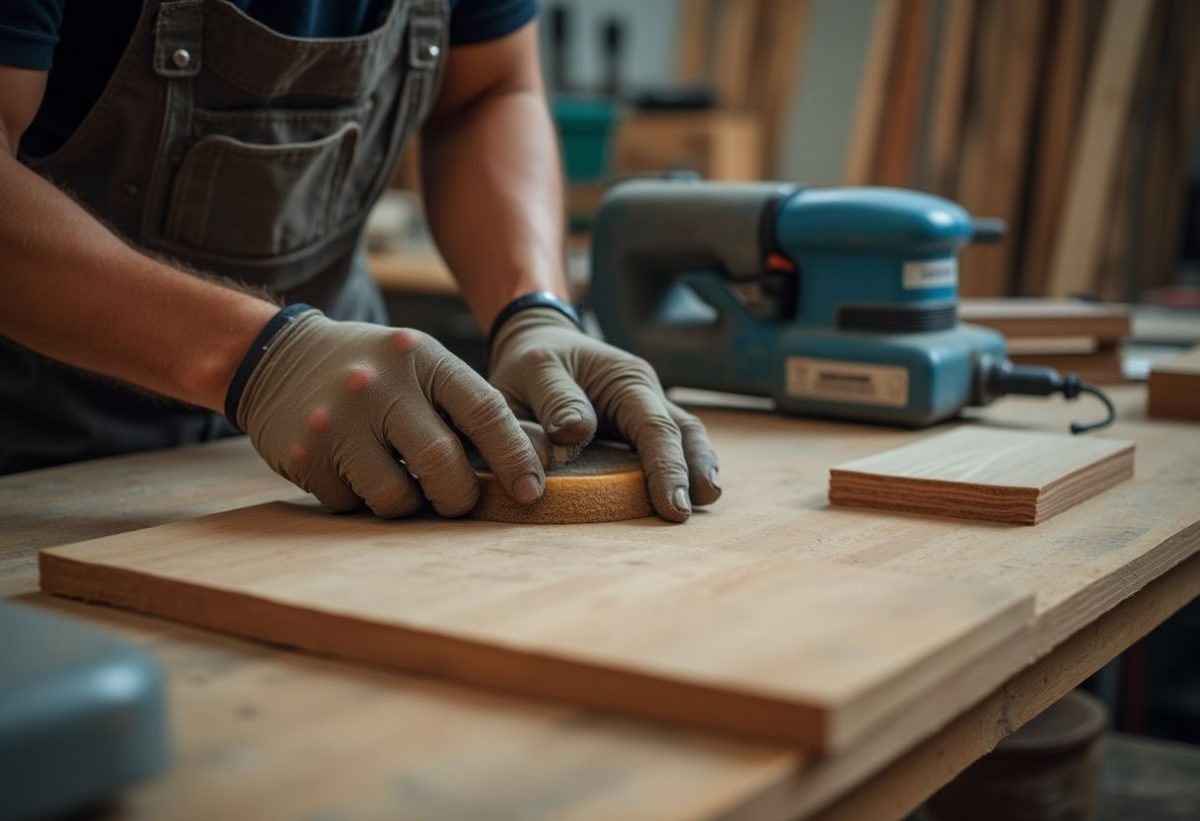
Abrasive materials play a discreet yet essential role in various industries. They are the invisible tools behind the shine of objects, the finesse of finishes, and even the softness of materials. When thinking of abrasives, one often imagines sandpaper or grinding wheels, but their scope and use extend far beyond.
Definition and Types of Abrasives
Abrasives come in various forms and compositions, each having a specific use according to the needs of the industry. They can be natural or synthetic, solid or liquid, soft or aggressive.
Natural abrasives include materials such as diamond, corundum, and sandstone. These materials are often used for tasks requiring high levels of precision. Synthetic abrasives, like silicon carbide or aluminum oxide, offer increased uniformity and durability, making them popular choices for intensive industrial applications.
- Diamond: Primarily used for cutting and polishing, it is the hardest of the abrasive materials.
- Corundum: A very hard mineral, often used for sandblasting and sanding.
- Silicon carbide: Ideal for metalworking due to its rigidity and wear resistance.
- Aluminum oxide: Frequently used for polishing metals, it is durable and effective.
Industrial Uses of Abrasives
In modern industry, abrasives are key players in shaping, polishing, and cutting various materials. They are indispensable in sectors ranging from metallurgy to jewelry manufacturing.
Metallurgical industries employ abrasives to cut, grind, and polish metal parts. Thanks to their abrasive capabilities, they improve the surface quality of finished parts, thereby increasing their corrosion resistance and durability. In the woodworking sector, abrasives are essential for sanding surfaces, ensuring a smooth and even finish.
- Cutting and shaping in metallurgy.
- Polishing surfaces in jewelry manufacturing.
- Sanding in the woodworking sector.
- Cleaning and preparing surfaces in the construction industries.
The Physical Properties of Abrasives
The effectiveness of an abrasive depends on several physical characteristics, such as hardness, grain size, friability, and particle shape. These properties determine their effectiveness for specific applications and directly influence the quality of the finished work.
Hardness is a key property that determines an abrasive’s ability to cut or polish materials without wearing out quickly. The grain size also plays a crucial role, as it determines the fineness of the finish obtained. Fine-grained abrasives are used for polishing, while coarse-grained ones are preferred for grinding.
Technological Advances and Innovations
Over the years, technological advancements have revolutionized the abrasive industry, introducing more efficient and eco-friendly materials. These innovations have increased the durability and performance of abrasives, making industrial processes more efficient.
Ceramic abrasives have gained popularity due to their ability to maintain high cutting efficiency while reducing the heat generated during the process. Additionally, the use of modern binders enhances the cohesion of abrasive particles, thereby extending the lifespan of the tools.
- Introduction of ceramic abrasives for better performance.
- Use of advanced binders for increased durability.
- Development of eco-friendly abrasives to minimize environmental impact.