
Comparing the catalog price of a new tractor with its actual cost in use rarely yields the same result. Between software subscriptions related to connected services, multi-year financing options, and the predictable depreciation at resale, the price displayed at the dealership represents only part of the equation. This article measures the gaps between these different items to provide a reliable estimate before any investment in a new agricultural tractor.
Connected subscriptions and the actual price of a new tractor
Since 2023-2024, several major manufacturers (John Deere, CNH, AGCO) are conditioning certain discounts on new tractors to the subscription of connected service contracts. Telemetry, predictive maintenance, GPS guidance: these functions, once included, are now charged as multi-year software subscriptions.
The catalog price appears to decrease, but part of the cost migrates to these recurring subscriptions. Over the ownership period of a tractor (often several years), the cumulative sum of these services can represent a significant item.
To correctly estimate the price of a new agricultural tractor, it is therefore necessary to add the negotiated total amount including tax and the total cost of subscriptions over the planned usage period. Asking the dealer for details on the services included in the discount, and those charged additionally, helps avoid underestimating the overall budget.

Financing simulators: reasoning in monthly cost rather than total price
Financing solutions dedicated to agricultural machinery now include online simulators. These tools calculate a monthly cost based on the rate, duration, and down payment, with durations of up to 84 months.
This approach changes the way the price of a tractor is estimated. The question is no longer about the displayed total amount including tax, but about the repayment capacity of the operation. A tractor with a high catalog price may turn out to be more accessible than a cheaper model financed over a short duration with a higher rate.
| Criteria | Estimation by catalog price | Estimation by monthly cost |
|---|---|---|
| Calculation base | Displayed total amount including tax | Monthly payment according to rate, duration, down payment |
| Visibility on cash flow | Low (total amount) | High (month-by-month impact) |
| Consideration of interest | No | Yes |
| Comparison between models | Direct but misleading | More realistic on total cost |
| Current maximum duration | Not applicable | Up to 84 months |
Before signing, simulating several scenarios (variable down payment, short or long duration) provides a clearer picture of the actual financial commitment. The price of a new tractor is better understood in monthly payments than in catalog price.
Projected depreciation: using the second-hand market as a reference
The second-hand market now serves as a numerical reference base to anticipate the loss of value of a new tractor. Valuation and listing platforms publish average prices by brand, power, and age. Some dealers directly use this data to build their trade-in offers.
Consulting these platforms before purchase allows for estimating the projected depreciation in the first years. A model whose second-hand value remains stable better protects the investment than a tractor whose value drops quickly after being put into circulation.
Variables that influence the depreciation of an agricultural tractor
- The brand and range: the most common models in the local market generally retain a better resale value, thanks to sustained demand in the second-hand market
- Power and versatility: a tractor suitable for multiple types of work finds buyers more easily than a highly specialized model
- The state of the dealer network: the proximity of a service point for the chosen brand reassures potential buyers and supports the value
- Annual operating hours: a tractor used moderately each year depreciates less quickly than a model that is heavily used
Incorporating the probable resale into the initial calculation transforms the purchase price into a net ownership cost, a much more relevant indicator for comparing two competing models.
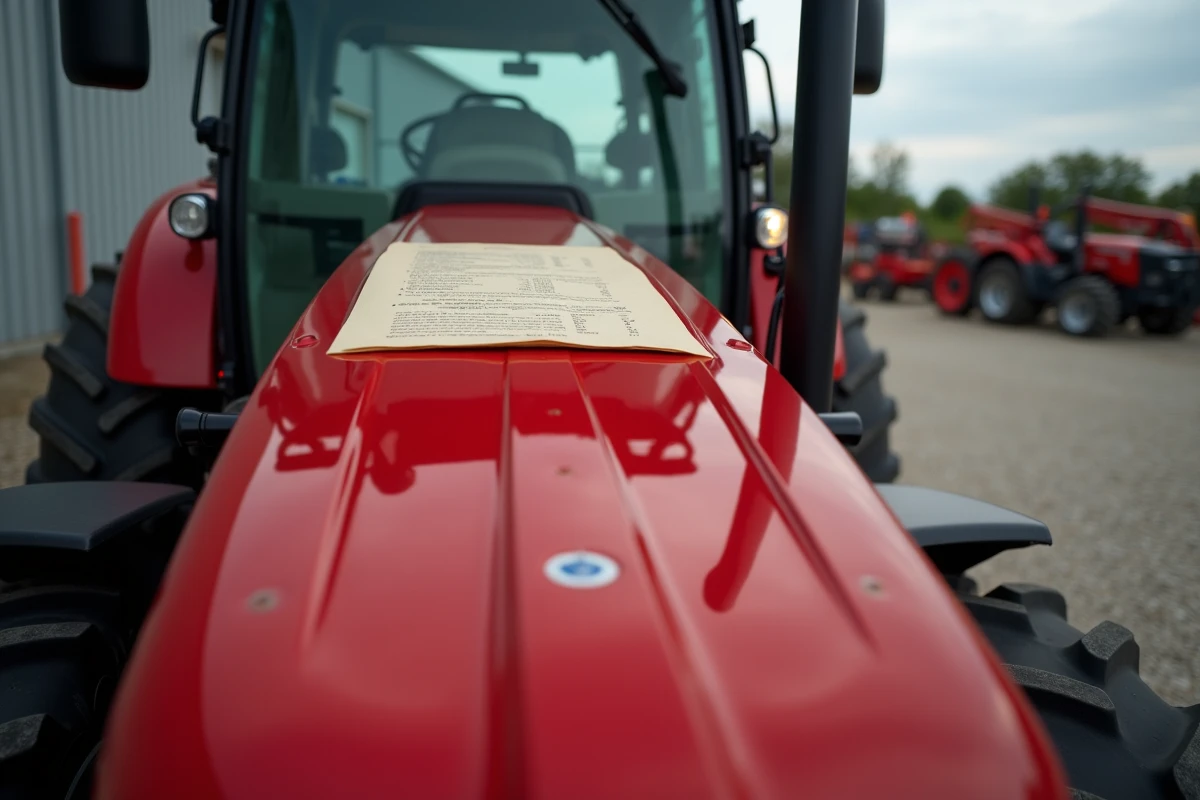
Total cost of ownership of a new tractor: items not to forget
The estimation of the price of a new agricultural tractor gains accuracy when it goes beyond just the purchase price. Several recurring items add up over the years and modify the economic balance of the investment.
Scheduled maintenance and wear parts
On a new tractor, maintenance costs generally remain low in the first years due to the manufacturer’s warranty. However, once this period is over, revisions, filters, tires, and wear parts become a regular expense. Asking the dealer for an estimate of the average annual maintenance cost over the expected lifespan refines the budget.
Insurance and fixed charges
The insurance for a new tractor costs more than that of an amortized model, as the insured value is higher. This additional cost, often overlooked in comparisons, weighs on the operation’s cash flow each year.
A well-estimated new tractor means a purchase price plus subscriptions plus financing minus resale. Reasoning solely on the amount displayed at the dealership almost always leads to underestimating the investment. Operations that cross-reference the catalog price with second-hand market data, financing simulators, and the details of charged connected services obtain a significantly more reliable estimate and negotiate with informed knowledge.