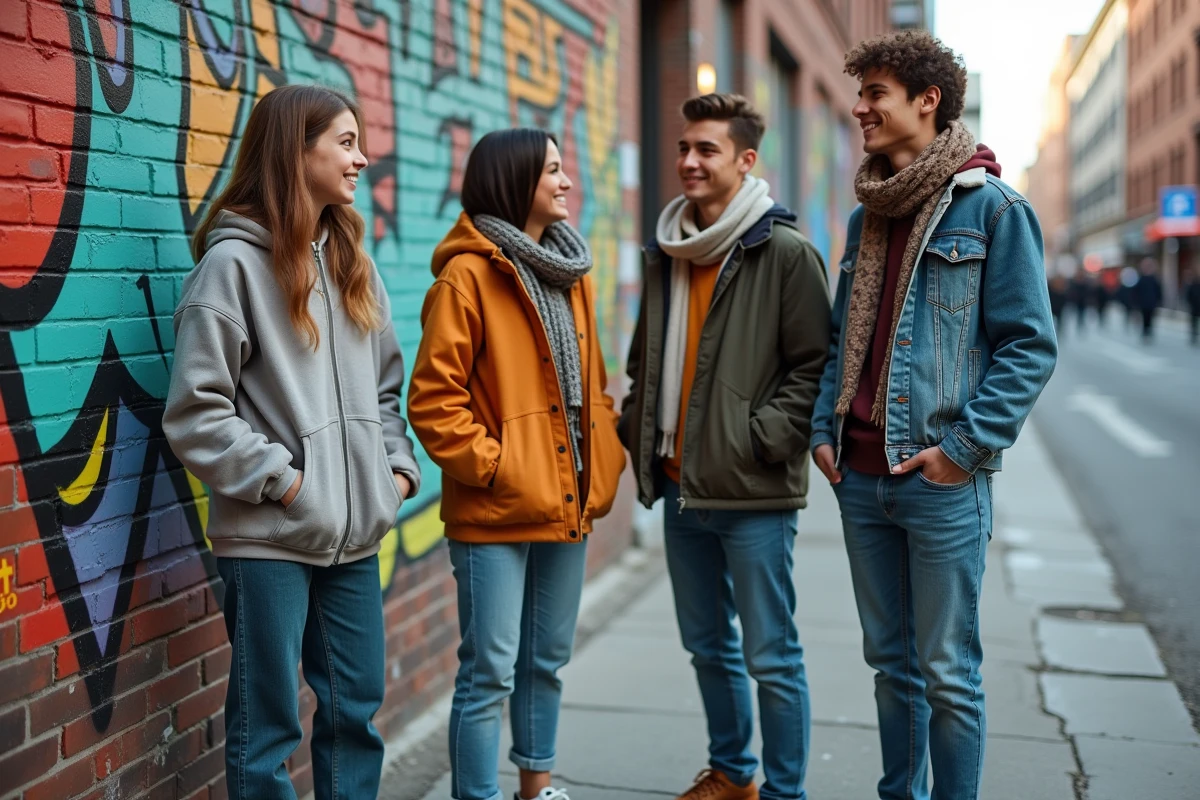
Fashion, among teenagers and young adults, operates as a system of signs. Each piece of clothing worn communicates a sense of belonging, a stance, or a rejection. Understanding how fashion and youth interact requires going beyond personal taste to examine the concrete mechanisms that link a textile choice to social behavior.
Style as Cultural Competence Among Youth
A recent phenomenon distinguishes the current generation from previous ones: the ability to mix opposing fashion registers within the same outfit. Pairing a thrifted item, a fast fashion piece, and a luxury accessory is not seen as a contradiction.
This mix constitutes a fluid status code. Knowing how to assemble these registers is considered a skill in its own right, signaling both environmental sensitivity (second-hand), mastery of trends (fast fashion), and a form of social capital (luxury).
Resourcefulness becomes a value in itself. Finding the right vintage piece at a low price, combining it with a branded garment, and then documenting the result on a social network reflects a know-how that peers recognize and value. Fashion style no longer merely reflects a budget; it conveys a capacity for personal curation. The link between fashion and youth is precisely read in these daily composition practices.

Algorithmic Hyper-Segmentation and Teen Fashion Behavior
Social platforms do not just disseminate trends. Their algorithms create highly codified aesthetic micro-communities. A teenager exposed to a content feed oriented towards “cottagecore” will not see the same references as another immersed in “gorpcore” or “dark academia.”
This segmentation produces a measurable effect on behaviors. Young people define themselves by styles that are readable within their online bubble but often incomprehensible outside of it. An item of clothing that seems innocuous to a parent may signal a precise belonging to a digital sub-group.
Aesthetic Bubbles That Shape Values
Each micro-trend conveys a set of implicit values. The “clean girl” promotes minimalism and self-care. “Gorpcore” values the outdoors and functionality. These associations are not accidental: brands construct style narratives that guide behaviors well beyond the wardrobe.
Fast fashion marketing exploits this dynamic. Online brands launch thousands of new items each year, each calibrated for a specific algorithmic sub-group. Teen clothing consumption thus becomes a direct response to a flow of personalized content, not an autonomous choice in front of a catalog.
Clothing as a Regulatory Tool Among Youth
A rarely discussed angle in conversations about teenage fashion concerns the sensory and psychological dimension of clothing choice. Educators and psychologists link the growing popularity of loose, soft, and non-restrictive clothing to a stress management strategy in school or university settings.
The success of loungewear and oversized cuts cannot be explained solely by an aesthetic trend. For some teenagers, wearing soft and comfortable fabric reduces sensory stimuli in a school environment perceived as stressful. This clothing choice functions as a coping mechanism, particularly for hypersensitive profiles.
When Comfort Becomes a Generational Value
This preference for comfort alters the values associated with appearance. Where previous generations associated elegance with constraint (heels, tight collars, fitted cuts), some young consumers believe that physical well-being takes precedence over aesthetic conformity.
The loungewear market is experiencing sustained growth, driven by this demand. Brands that communicate comfort and mental well-being attract a teenage clientele that translates its psychological concerns into concrete consumption choices.
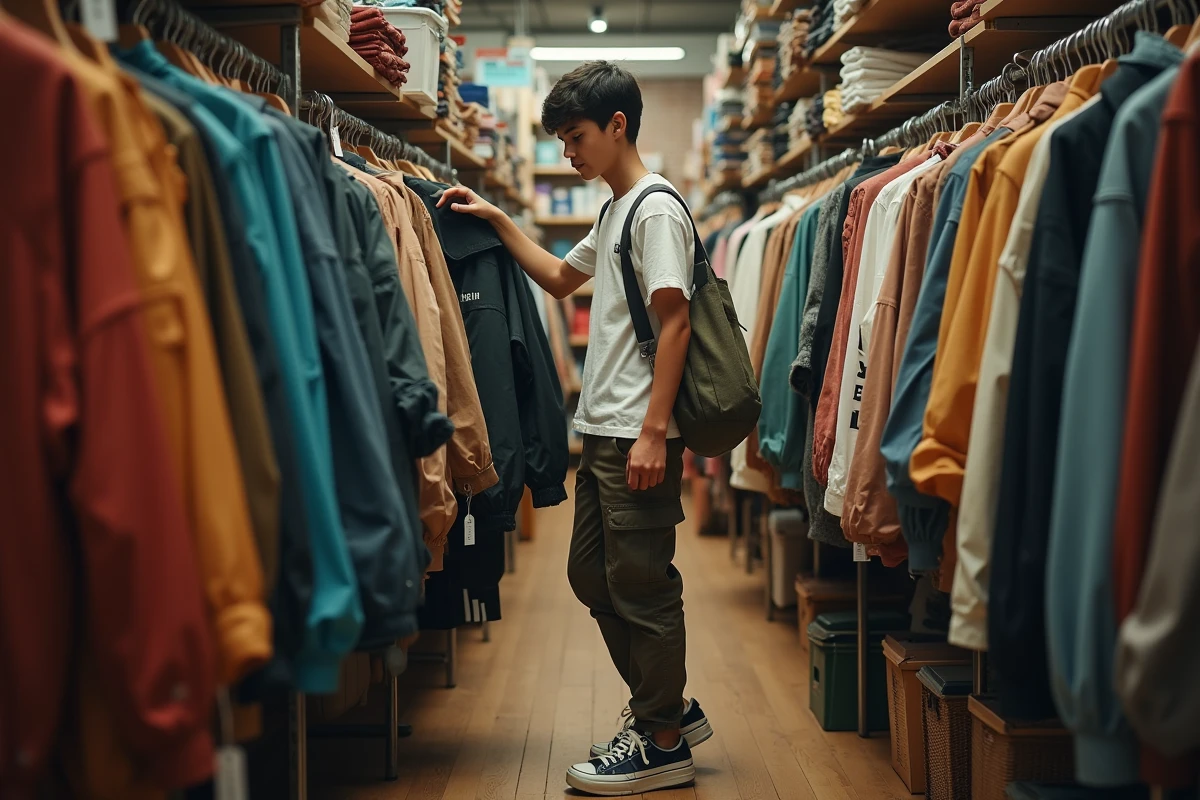
Peer Pressure and Impulsive Buying: The Concrete Mechanism
The social pressure related to fashion among teenagers follows an identifiable circuit. Three elements combine to transform a trend into a purchase:
- Repeated exposure to a style via social media creates familiarity that pushes for adoption. The more a garment appears in the feed, the more desirable it seems.
- Validation from peers (likes, comments, shares) reinforces the feeling that owning this item is a condition of belonging to the group.
- Immediate availability on fast fashion sites, often at low prices, reduces the friction between desire and purchase. The time between discovering a trend and acquiring it is counted in minutes.
This circuit produces a documented impulsive buying behavior, where the decision is no longer guided by a need but by a social dynamic accelerated by technology.
An Effect on Consumption Values
The repetition of this cycle alters young people’s relationship with ownership. Clothing becomes disposable, its emotional value diminishes after a few online posts. This logic comes into tension with the environmental discourses that the same generation adheres to, creating a dissonance that many resolve through the mix of second-hand and fast fashion mentioned earlier.
For today’s young consumers, fashion is not an isolated domain from the rest of their lives. It operates as a terrain where social belonging, body relations, emotional management, and contradictions between stated values and actual practices are simultaneously negotiated. It is in this gap between discourse and purchasing action that the most revealing question of the impact of fashion on adolescent behavior plays out.