A beginner motorcyclist in 2025 does not face the same catalog as five years ago. Between electronic aids introduced on smaller displacements, the first electric trails accessible with an A1 license, and anti-pollution standards that eliminate models, choosing a motorcycle requires understanding what has changed on the ground.
Electronic aids on 300-500 cm³ motorcycles: what changes the handling
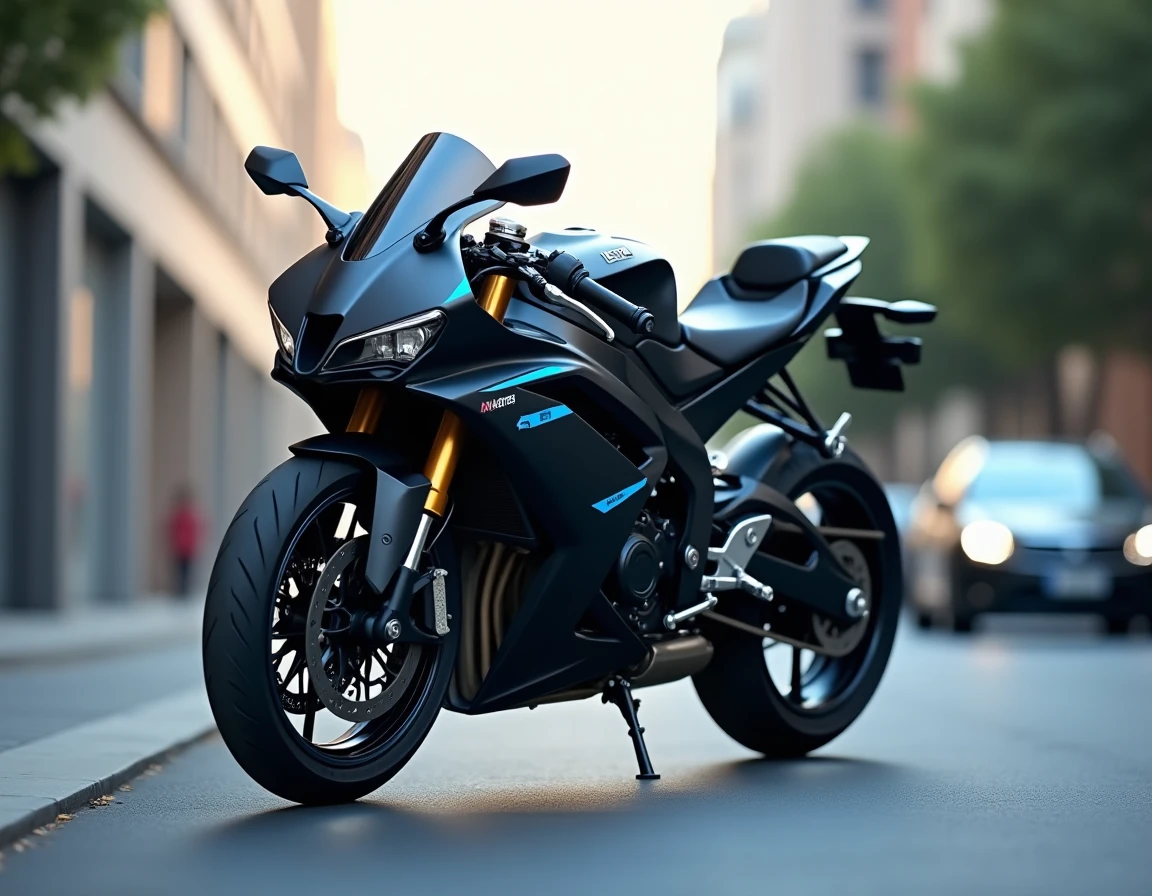
Traction control and cornering ABS are still often associated with high-end sports bikes. In the 2024 and 2025 models, Honda, Yamaha, and Kawasaki are integrating these technologies into their entry-level ranges, between 300 and 500 cm³. The Honda CB500 Hornet, Yamaha MT-03, and Kawasaki 400/500 now offer Rain or Urban riding modes tailored for beginners.
In practice, a rain mode limits throttle response and makes the motorcycle more predictable on wet roads. For a beginner riding in the rain on a departmental road, the difference is felt from the first braking. The angle-sensitive ABS intervenes when braking in a curve, a situation that causes many falls among new license holders.
To explore motorcycles on Motorcycle Boy, one can compare these features model by model and identify which machines actually offer these aids as standard, not as options.
Activatable power limiters also make life easier for A2 license holders. Instead of buying a restricted motorcycle and then paying for a dealer upgrade after two years, some models allow you to switch between A2 mode and full power via the dashboard. Kawasaki offers this logic on several of its new references.
Electric motorcycles equivalent to 125 cm³: an expanding offer for the A1 license
Since 2023, the catalog of electric motorcycles accessible with an A1 license (or a B license with a seven-hour training) has significantly expanded. Manufacturers like Sur-Ron, Horwin, and Yadea are directly targeting this segment, with 125 cm³ equivalent machines aimed at urban and suburban use.
Feedback varies on this point, but the issue of range remains the primary barrier. On a round trip commute of less than forty kilometers, most of these models perform without difficulty. Beyond that, one enters a zone where recharging during the day becomes a real logistical constraint.
What to check before buying an A1 electric motorcycle
- Charging time on a standard household outlet: some models require a full night, while others recharge in three to four hours
- Availability of spare parts and a maintenance network in France, which is still uneven among Asian brands
- The weight of the battery, which alters handling at low speeds and can surprise a beginner used to thermal 125s
The EICMA 2023 and 2024 presentations confirm that the offer of small electric trails is rapidly developing, with models designed for mixed road and trail use. For a beginner who wants to ride without a clutch and with reduced maintenance, this is a strong argument.
Euro 5 standards and the disappearance of models: concrete impact on choices
The implementation of Euro 5, and then Euro 5+, standards has pushed several manufacturers to withdraw models from the catalog rather than adapt them. We are losing popular references, sometimes those that motorcyclists have recommended to beginners for years.
For a buyer, the direct consequence affects the used market. Models withdrawn from new see their value temporarily rise, which skews the benchmarks. A recent used model compliant with Euro 5 is a better purchase than an older, cheaper model that is more polluting and potentially excluded from certain low-emission zones in urban areas.
New or used motorcycle: the criteria that matter
In the used market, power and looks are not enough. It is recommended to check compliance with current standards, the presence of a functional ABS (mandatory on new motorcycles for several years), and the maintenance history, particularly the replacement of pads and chain tension.
- Check the date of first registration to determine the applicable Euro standard
- Inspect the condition of the helmet and equipment sold with the motorcycle: a helmet over five years old loses shock absorption capacity
- Request maintenance invoices from the dealer, especially for Honda and Yamaha models, whose network is dense in France
Néo-retro style and riding comfort: why these motorcycles are so appealing
The neo-retro segment continues to capture a significant share of sales at Honda and Yamaha. The reason lies less in nostalgia and more in a straight riding position that suits daily commutes. You ride seated, not laid out on the tank, and the vintage style attracts profiles that do not identify with sporty aesthetics.
These motorcycles often share a modern technical base (fuel injection, ABS, LED lighting) dressed in a retro line. Comfort on long trips remains limited compared to a trail or touring model, but for urban and suburban use, it’s an effective compromise.
On the equipment side, the trend also affects helmets and jackets. Brands like Furygan offer ranges that combine certified protections and vintage looks, allowing for coherence without sacrificing safety.
Choosing a motorcycle in 2025 comes down to concrete details: the presence of electronic aids suited to one’s level, compatibility with urban access standards, and a realistic usage that one admits before signing. Trying several models on the road before buying remains the most useful advice, yet it is often the least applied.