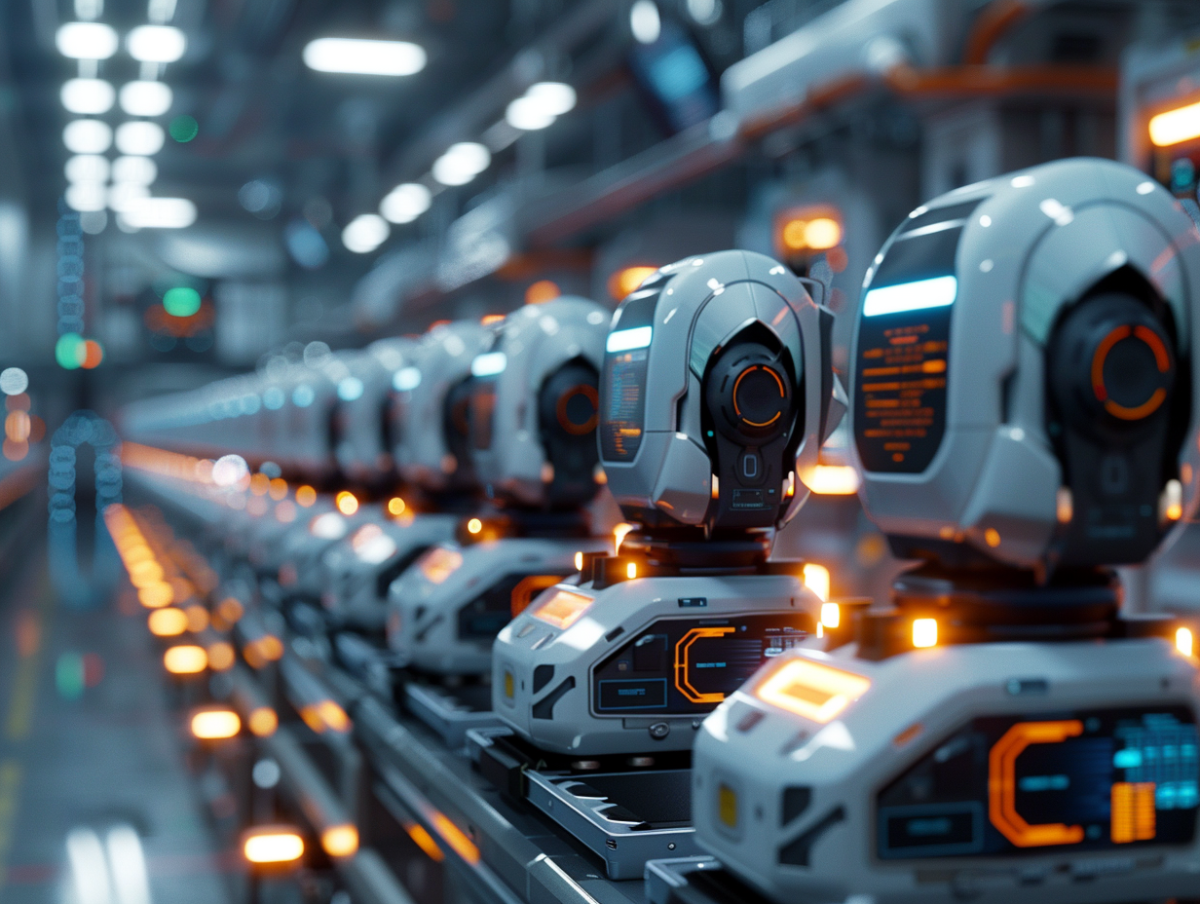
The advent of digital technology and the relentless progress in technology are radically shaping the contemporary industrial landscape. Advanced robotics, artificial intelligence, the Internet of Things (IoT), and 3D printing are some of the driving forces behind this transformation. These innovations are not only revolutionizing manufacturing processes but also redefining supply chains, data management, and interactions between businesses and consumers. Traditional industries are adapting or reinventing themselves to take advantage of these advancements, while new emerging sectors, such as additive manufacturing, are opening previously unexplored horizons.
Technological Innovations Revolutionizing Modern Industry
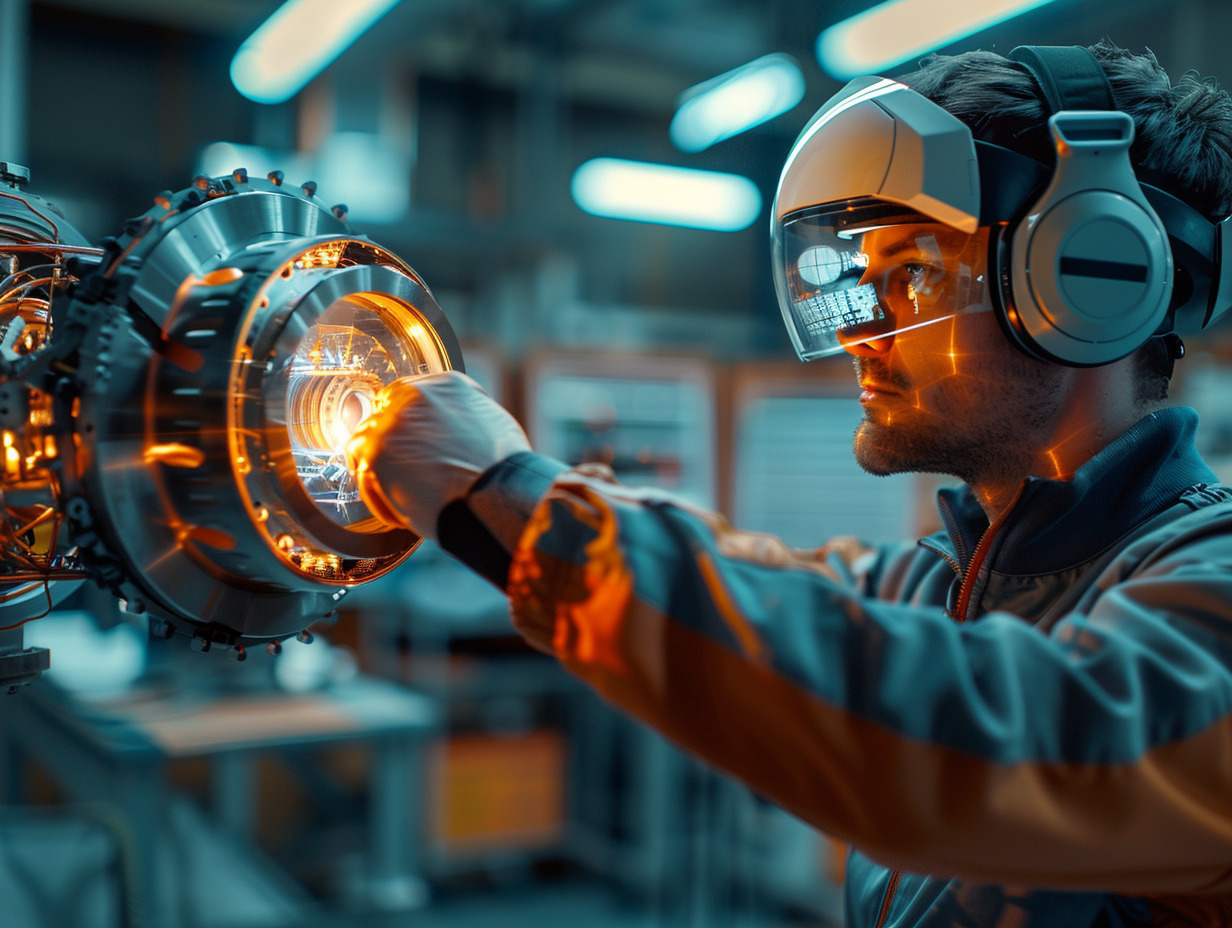
In the era of Industry 4.0, augmented reality and virtual reality are more than just futuristic concepts; they are becoming everyday tools in factories and workshops. With virtual reality headsets and smart glasses, operators can perform complex tasks with increased precision, benefiting from information and schematics overlaid in their field of vision. Arkevia, a new device on the market, illustrates this trend by offering virtual tours to train employees without exposing them to unnecessary risks.
Innovation doesn’t stop there. Robotic exoskeletons, like the famous Hercule V3, are changing the relationship with physical effort. They allow workers to handle heavy loads without the risk of injury, thereby improving work quality and productivity. These new technologies, which seem straight out of science fiction, are now a tangible reality and are being deployed on a large scale across various industrial sectors.
Robotic automation and Big Data also play a significant role in this revolution. Collaborative robots, or cobots, work alongside humans, optimizing production lines while adapting to the specific needs of businesses. Big Data, on the other hand, enables data analysis on an unprecedented scale, providing detailed insights for more effective decision-making and a better understanding of processes.
Smartphones and dedicated applications are transforming how operations are monitored and controlled. The convergence of these devices with industrial technologies offers increased flexibility and connectivity, allowing employees to access critical data in real-time, regardless of their location. This integration reflects the digital transformation underway, making factories smarter and more responsive to the changing demands of the market.
Impact and Challenges of New Technologies in Industry
In the face of the advent of new technologies in industry, the impact is both profound and complex. The upgrading of modern industry, driven by the rise of artificial intelligence, the Internet of Things, and additive manufacturing, heralds a radical transformation of production processes. The factory of the future is taking shape before our eyes, a more agile factory where data analysis becomes the new nerve center, enabling continuous optimization and unprecedented responsiveness.
These major advancements do not come without raising technological challenges. The need to train employees to handle these cutting-edge technologies, such as collaborative robots and data analysis tools, requires significant investments in time and resources. Companies like Thales, through their 3D product catalog, are paving the way for increased connectivity between different geographical areas, but implementing such innovations necessitates a revision of training and integration strategies.
Major events like Laval Virtual, organized by companies such as Artefacto, play a fundamental role by allowing the discovery and showcasing of expertise in augmented reality and virtual reality. These events create spaces for exchange and learning, essential for understanding the stakes of the digital revolution and preparing industry players for the ongoing transformations.
Organizations like the Innovation Center for Operations, inaugurated by the Boston Consulting Group, function as living laboratories for the industry of the future. They not only allow testing and discovering innovations that will shape the factories of tomorrow but also address the challenges related to their integration. The industry must face a dual requirement: that of technological innovation and that of human and organizational adaptability.