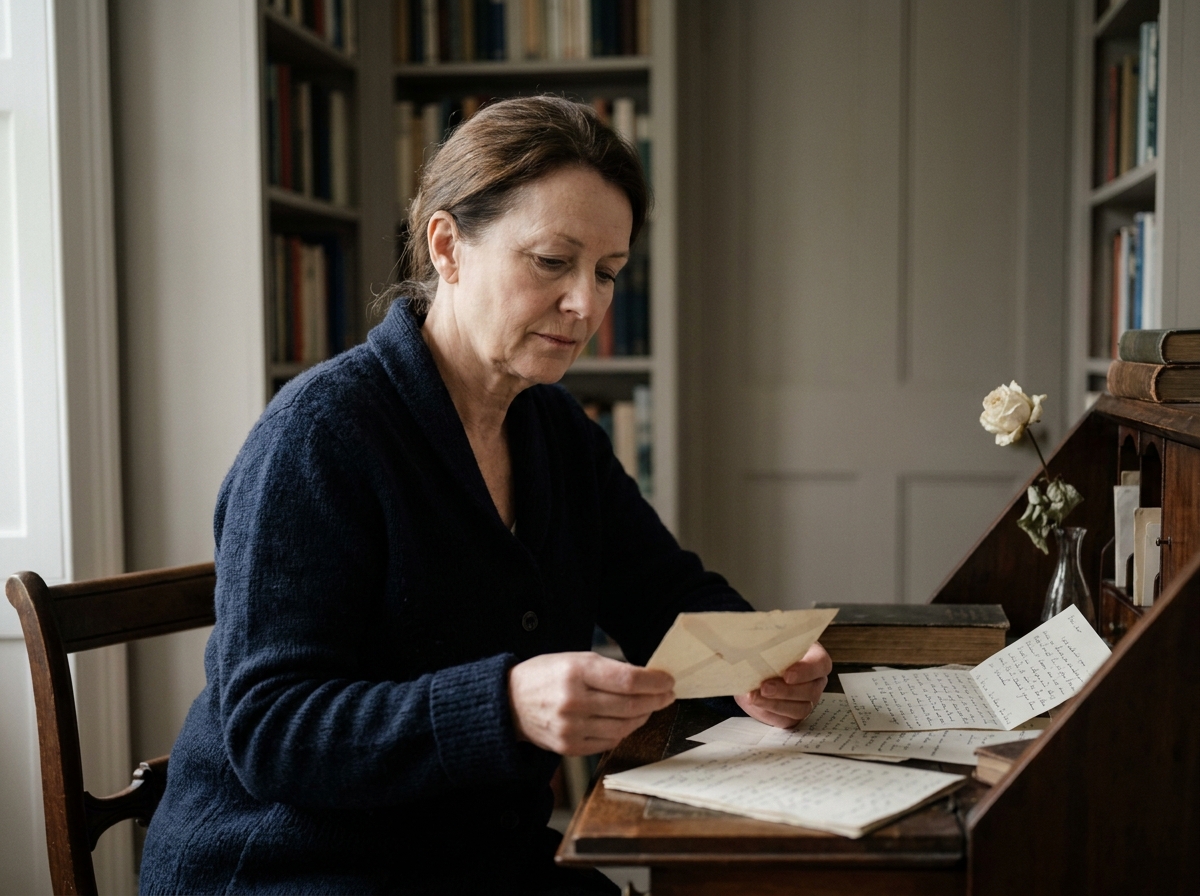
When receiving a stack of condolence cards, messages on the phone, and flowers delivered by people you haven’t seen in years, the question quickly arises: how to respond without saying too much or appearing distant? The words of thanks after a death confront a real tension between what we truly feel and what we are willing to share.
The trap of the generic message in thank-you notes after a death
We have all received or sent this kind of formula at some point: “The X family, touched by your expressions of sympathy, sends you their sincere thanks.” The message is polite, correct, and says nothing. The problem is that it gives the impression of having been copy-pasted, which is often the case.
Modesty pushes towards this type of neutral text. We protect ourselves, we avoid exposing ourselves. But the person who took the time to write a handwritten letter or attend the funeral perceives the difference between a generic thank-you and a note that truly concerns them.
Personalizing a thank-you card for a death does not mean recounting your grief in detail. You can simply acknowledge the gesture received: “Your presence at Paul’s ceremony was comforting” or “The flowers you sent accompanied our last moments at home.” Naming the gesture received is enough to make the message sincere.
Sincerity lies in the concrete detail, not in effusion. A three-sentence note that mentions the deceased’s name and the specific gesture touches much more than a paragraph filled with adjectives.

Adapting the tone of thanks to the degree of closeness
You do not thank a distant colleague in the same way you thank a friend who stayed at your home the night before the funeral. Modesty and sincerity are not measured the same way depending on the circle of closeness.
The intimate circle: room for raw sincerity
For those close to you who have supported you during the hardest days (running errands, babysitting, silent presence), you can afford a direct tone. “Without you this week, we wouldn’t have managed” says more than a long, polished message. With close ones, clumsiness is preferable to distant politeness.
No need for a printed card for this circle. A text sent at three in the morning because that’s when you think of it is perfectly acceptable.
The intermediate circle: the right balance
Extended family, long-time friends, close neighbors: these people have made a significant gesture (attendance at the funeral, donation, letter). A handwritten note on a simple card works well. Mention the deceased by their first name, cite the gesture, and thank them. Three to five sentences are sufficient.
The extended circle: embraced sobriety
Colleagues, acquaintances, professional relations of the deceased: a collective message or a thank-you card sent by mail remains the norm. Modesty is appropriate here. These people do not expect intimacy; they expect a sign of recognition.
A group message remains acceptable for the extended circle, provided the tone is not cold. Adding a personal sentence at the end of the card makes a difference.
Thank-you after a death: what can be written without crossing your own limits
The difficulty is not only in finding the words. It’s knowing how far you are willing to go in what you show of your pain. Some families are comfortable with emotional expression, others are not, and both approaches are legitimate.
Here are concrete guidelines for measuring:
- You can mention a memory of the deceased without recounting the circumstances of the death. “Mom loved your garden; she often talked about it” conveys something true without exposing the pain.
- You can express your gratitude without describing your emotional state. “Your note supported us” works better than “We are devastated, but your message helps us hold on.”
- You can acknowledge that you are at a loss for words. “We don’t quite know what to write, but know that your gesture matters” remains sincere and modest at the same time.
The common trap is wanting to match the intensity of the received message. Someone wrote you two beautiful pages, and you feel obliged to respond with the same intensity. Responding in your own words, even if simple, is better than forcing a tone that is not yours.
When to send your thank-you notes after the funeral
Opinions vary on this point, but the most common practice is to send them within a month following the ceremony. Nothing obliges you to adhere to this timeline strictly. A thank-you sent two months later is still welcome because the bereaved person is going through a process that does not follow a schedule.
What matters more than timing is not imposing an additional burden during an already heavy period. If writing these messages is exhausting, you can delegate part of the task to a trusted close person for the extended circle while reserving the words intended for the intimate ones.
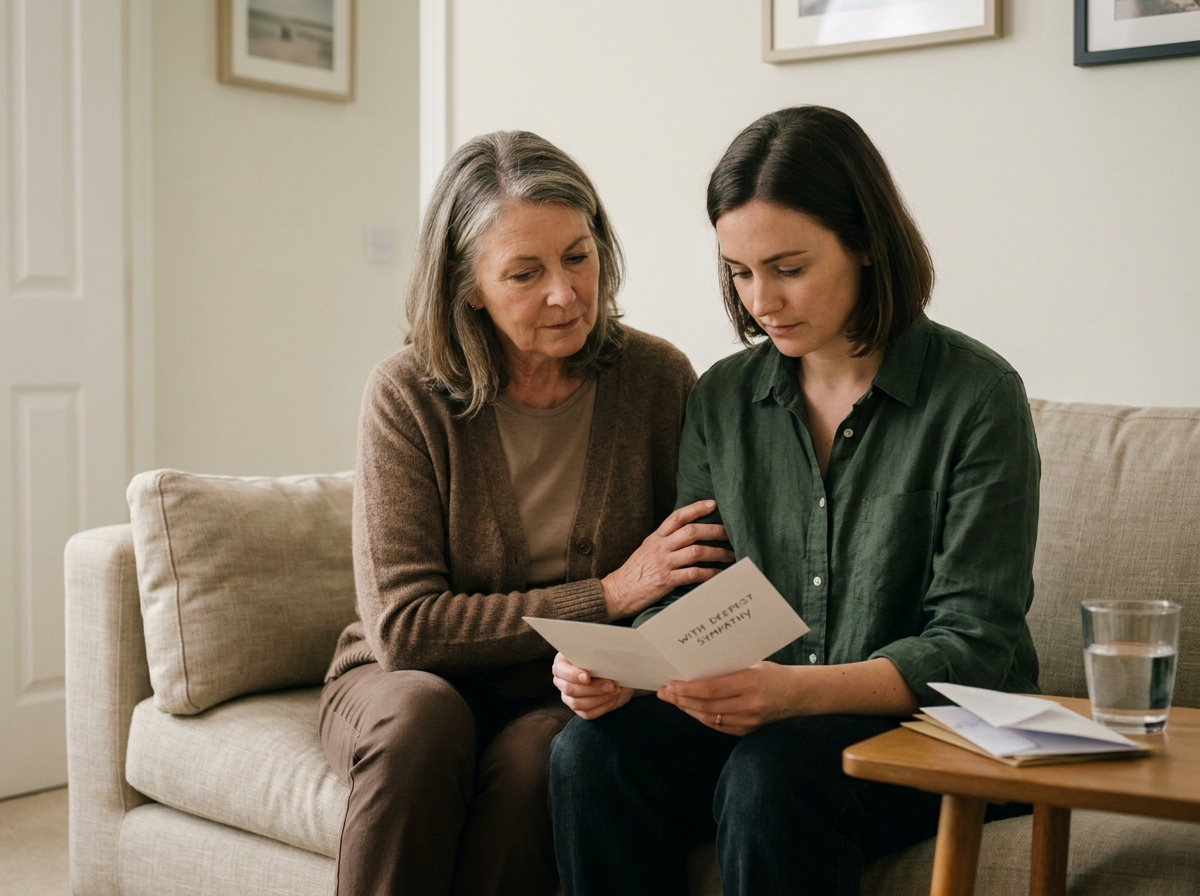
Thank-you on social media and online memorial spaces
Posting a thank-you message on Facebook or Instagram after a death has become common. This channel raises a specific question of modesty: what is written there is visible to everyone, sometimes even to strangers.
On a social network, writing to thank without detailing the intimate requires particular attention. A short message thanking the people who showed their support works well. Mentioning the deceased by their first name humanizes the message without turning the post into a personal diary.
Some platforms allow transforming a deceased person’s profile into a memorial space. Posting a thank-you in this space makes sense because it addresses a community already formed around the memory.
However, responding individually to each comment under a post is not expected. A “thank you all” in a pinned comment is sufficient for the wider circle.
The balance between modesty and sincerity in a thank-you note does not rely on a magic formula. It depends on three things: naming the deceased, citing the gesture received, and writing in your own words. Everything else, the length, the medium, the timing, adapts to what you are capable of giving at that moment.