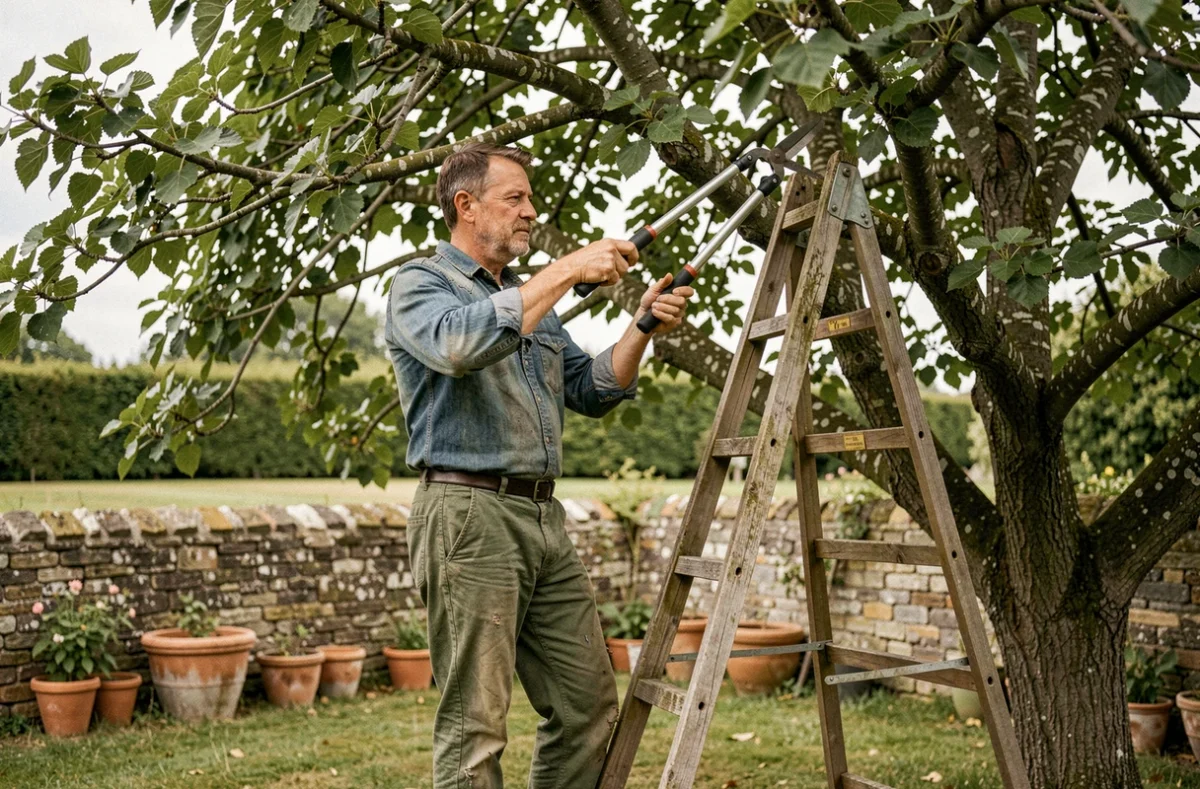
A plane tree mulberry left free for two or three years eventually sends out vertical branches that break the umbrella shape and reduce the useful shade on the terrace. Pruning a plane tree mulberry is not just about shortening what sticks out: each cut directs the regrowth, and a timing mistake can cause a sap flow that is hard to stop. Let’s take stock of the important actions, the right schedule, and the traps to avoid.
Pruning the plane tree mulberry and sap flow: the trap of bad timing
On the ground, the most common problem is not the cutting technique but the chosen timing. A plane tree mulberry pruned while the sap is already rising can “bleed” profusely at the wounds. This phenomenon weakens the tree and delays healing.
The recommendation documented by Flore de France is clear: work when there is no frost and before the sap rises. In practice, the ideal window is in late winter, when the last frosts are receding but before the visible swelling of the buds. This period varies depending on the local climate, sometimes by several weeks between the south and north of France.
You can also explore other natural methods on Jardiner Naturellement to refine the schedule according to your region. The most reliable marker remains direct observation: as long as the buds are dormant and the cut wood is not oozing, the window is open.
Cutting in the right place on a plane tree mulberry: the logic of sap flow
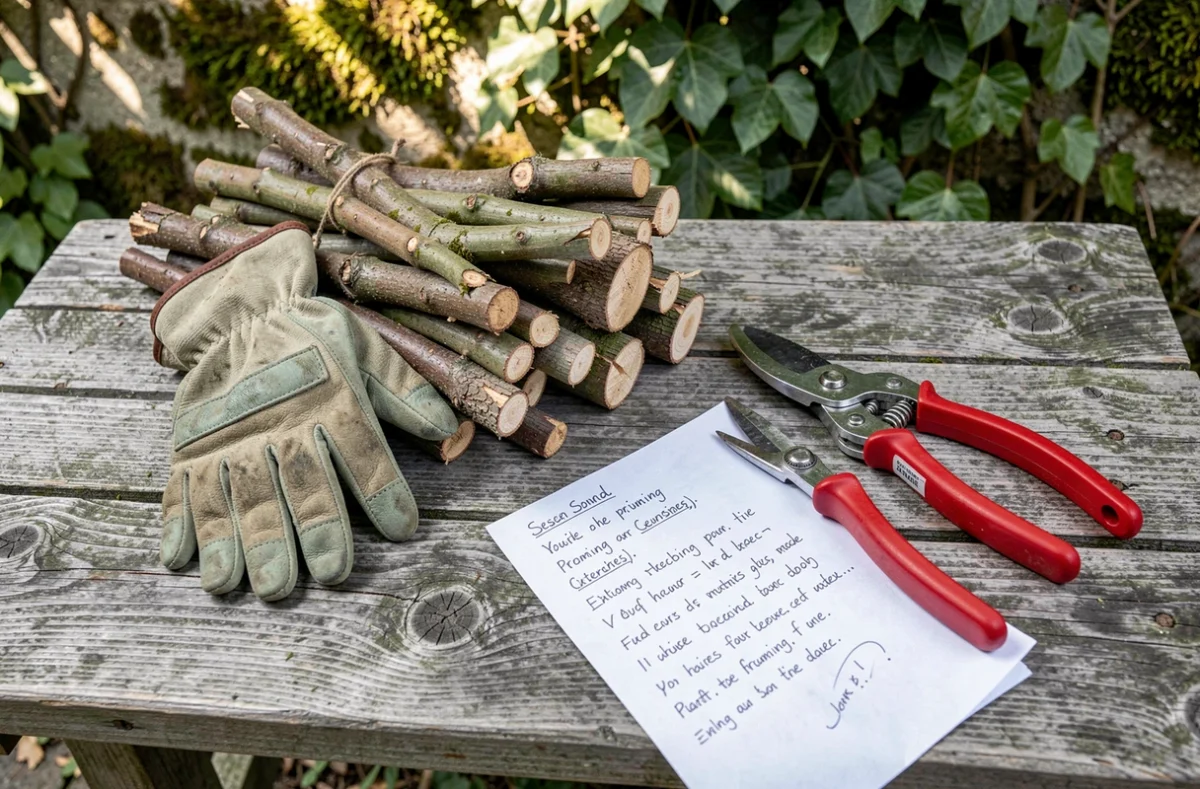
Many guides focus on the final shape (the famous umbrella) without explaining why certain cuts can kill an entire branch. The principle of sap flow is key: each main branch must retain at least one shoot from the previous year capable of nourishing the regrowth. If all the young shoots are removed from a large branch, it risks no longer producing viable buds.
Specifically, before cutting, locate the eyes (buds) on each shoot. The cut is made a few millimeters above an eye oriented outward and horizontally. This action directs the future growth laterally, which reinforces the desired spreading shape for shading.
What to prioritize for removal
- Shoots that grow vertically upward (suckers), as they break the umbrella silhouette and capture energy at the expense of lateral branches
- Dead wood or branches that cross in the center of the crown, sources of friction and injury
- Shoots directed inward toward the tree, which thicken the center without providing useful shade on the periphery
A sharp pruning shear is sufficient for small diameter shoots. For thicker branches, switch to a lopper or pruning saw. Clean cuts facilitate healing and make the application of sealant unnecessary in most cases.
Adult plane tree mulberry: should you prune every year?
It is often said that you should prune your plane tree mulberry every year. In reality, pruning is not necessary if the tree has enough space. A solitary specimen in a large garden, far from facades and power lines, can suffice with a cleanup of dead wood and troublesome branches every two or three years.
Annual pruning is mainly justified when the tree overhangs a terrace, parking area, or pathway. In this case, the crown is maintained at a controlled span by shortening the shoots of the year by two or three buds. This regular intervention is less traumatic than a severe pruning every five years, which requires removing large branches and exposes the tree to wide wounds that take a long time to heal.
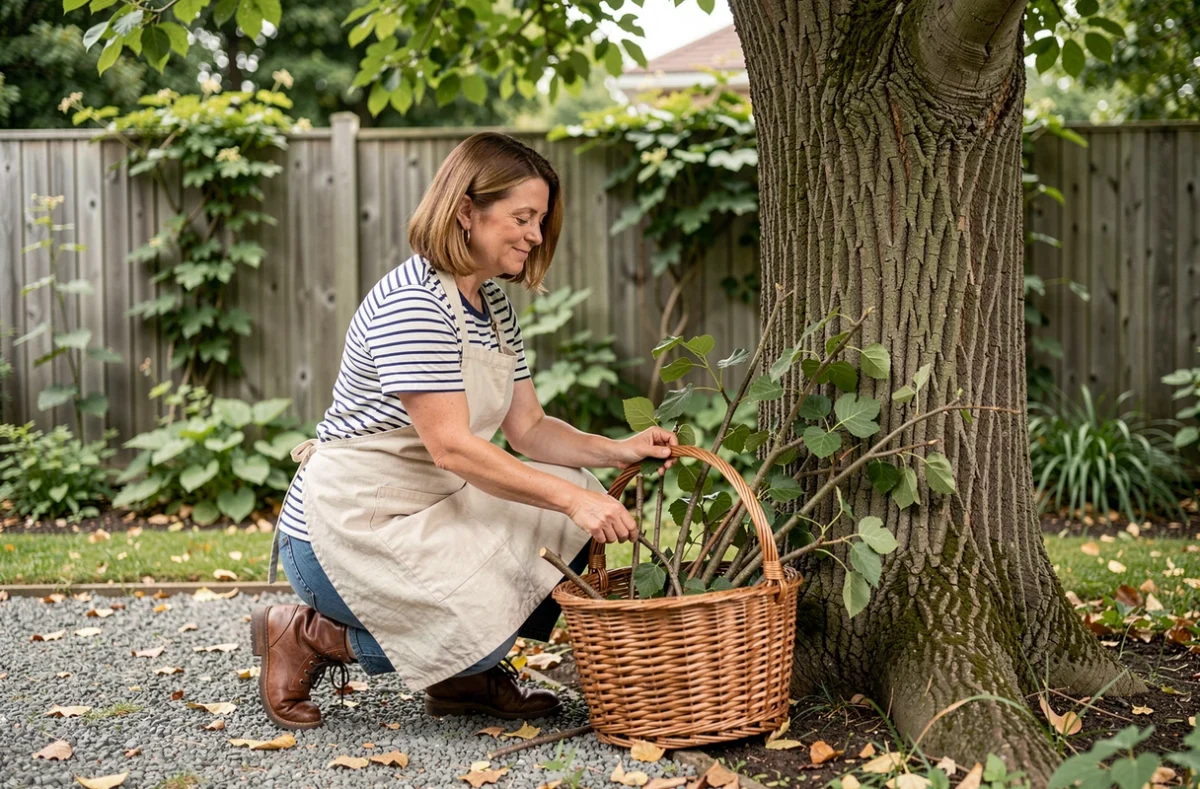
The frequency also depends on the vigor of the variety. On a particularly vigorous specimen, skipping two years of pruning can transform an orderly crown into a tangle that is difficult to rectify without drastic cuts.
Regulations and nesting: check before taking out the saw
A point rarely addressed in pruning guides: the legal question. The prohibition on pruning between March 16 and August 15, often cited, primarily concerns beneficiaries of CAP aid (Article D. 614-52 of the Rural Code). For an individual, this rule does not apply in the same way.
However, destroying a nest or eggs of protected species is prohibited by Article L. 411-1 of the Environmental Code, and this applies to everyone, whether a farmer or not. Before any late spring intervention, inspect the crown. A blackbird or a dove nesting in the branches is enough to make pruning illegal until the young have fledged.
Municipal regulations may also impose additional constraints, especially in classified urban areas. A quick call to the town hall before pruning a tree visible from the public road can avoid unpleasant surprises.
Tools and cutting techniques for a healthy plane tree mulberry
The choice of tool determines the quality of healing. A bypass pruning shear is suitable for shoots up to about two centimeters in diameter. Beyond that, a ratchet or gear lopper multiplies force without crushing the tissues.
- Disinfect the blades with alcohol between each tree (or between each suspicious branch) to limit the transmission of pathogens
- Cut at an angle, slightly above the chosen bud, so that rainwater drains away from the bud
- Never leave a stub (chicot) beyond the last bud: the residual dead wood becomes an entry point for fungi
Sharpening your tools before each pruning session radically changes the sharpness of the cuts. A dull blade tears the bark instead of slicing it, which slows healing and increases the risk of infection.
The healing sealant, long recommended out of habit, is no longer considered necessary when the cut is clean and made at the right time. The tree naturally produces a callus that closes the wound in one or two seasons on small diameter shoots.
Pruning a plane tree mulberry remains an accessible task as long as you respect the sap schedule, retain sap flow on each main branch, and check for the absence of nests before intervening in spring. A well-managed tree from its early years then requires little effort to maintain its umbrella shape.