Buying a used electric car seems like a good deal today. Prices are dropping, the supply is diversifying, and recent models offer comfortable ranges. The catch is that the actual condition of the vehicle is not reflected on the odometer as it is with a combustion engine. The battery, the onboard software, and the charging history matter just as much, if not more, than the number of kilometers driven.
Battery of a used electric car: what to check before buying
For a combustion vehicle, you open the hood, listen to the engine, and check the tire wear. For an electric vehicle, the critical component is invisible: it’s the battery. It represents a major part of the vehicle’s value, and its replacement often costs as much as a small new car.
Have you ever noticed that two identical electric cars, with the same mileage, can show very different battery conditions? The explanation lies in the usage conditions, and especially in the charging habits.
An analysis published by Capital in October 2026 clearly distinguishes two profiles. Vehicles primarily charged at home, either via a standard outlet or a wallbox, show lower battery degradation. In contrast, those that have frequently used fast charging in direct current exhibit a more pronounced loss of capacity.
Specifically, before signing, request a battery diagnostic performed by an independent tool. Several providers now offer this type of certificate, which indicates the “State of Health” (SOH), meaning the percentage of remaining capacity compared to new condition. A high SOH means that the battery has retained most of its original range.
Here are the points to check on the battery before any purchase:
- The SOH (state of health) measured by an independent diagnostic tool, not just the estimate displayed on the dashboard
- The charging history: proportion of fast charges compared to slow charges, available through manufacturer data or third-party applications
- The number of complete charge cycles performed since the vehicle was put into circulation
- The remaining manufacturer warranty on the battery, which varies by brand and the date of first registration
If the seller refuses to provide this information or to perform a diagnostic, it’s a clear warning sign. Walk away.

Software history and updates: an overlooked car buying criterion
For a combustion car, maintenance consists of oil changes, filters, and brake pads. For an electric vehicle, part of the maintenance involves software updates. And this is a point that many used car buyers overlook.
Manufacturers regularly deploy fixes that improve battery management, real range, or compatibility with charging stations. A vehicle whose software has never been updated may exhibit malfunctions that have long been corrected in updated models. To learn more about these topics, the auto section on Les Instants D’Une Blogueuse regularly covers news and practical advice related to automobiles.
Check the installed software version and compare it with the latest version available on the manufacturer’s website. If several major updates are missing, inquire about the possibility of installing them and their potential cost.
Some manufacturers also condition access to features (connected navigation, remote preheating, charge optimization) on a subscription. Ask which services are active and which require a paid renewal.
Low emission zones and Crit’Air sticker: impact on the used car market in France
The regulatory environment directly influences the resale value of vehicles, including electric ones. The framework of ZFE (low emission zones) remains legally in effect in France, even though the implementation schedules vary significantly from one metropolitan area to another.
Concrete example: in Strasbourg, the ban on Crit’Air 3 vehicles, initially scheduled for the end of 2026, has been postponed to 2028. Local aids and exemptions are maintained, targeting low-income households. The ZFE schedule may therefore diverge depending on the metropolitan area, complicating projections for a used car buyer.
For an electric vehicle, the question does not arise in terms of Crit’Air (electric vehicles benefit from the most favorable classification). The issue is rather indirect: restrictions on combustion vehicles drive demand towards used electric cars, which supports prices in this segment. Buying now, before this demand intensifies further, can represent a good decision.
Technical inspection of an electric car: new rules to know
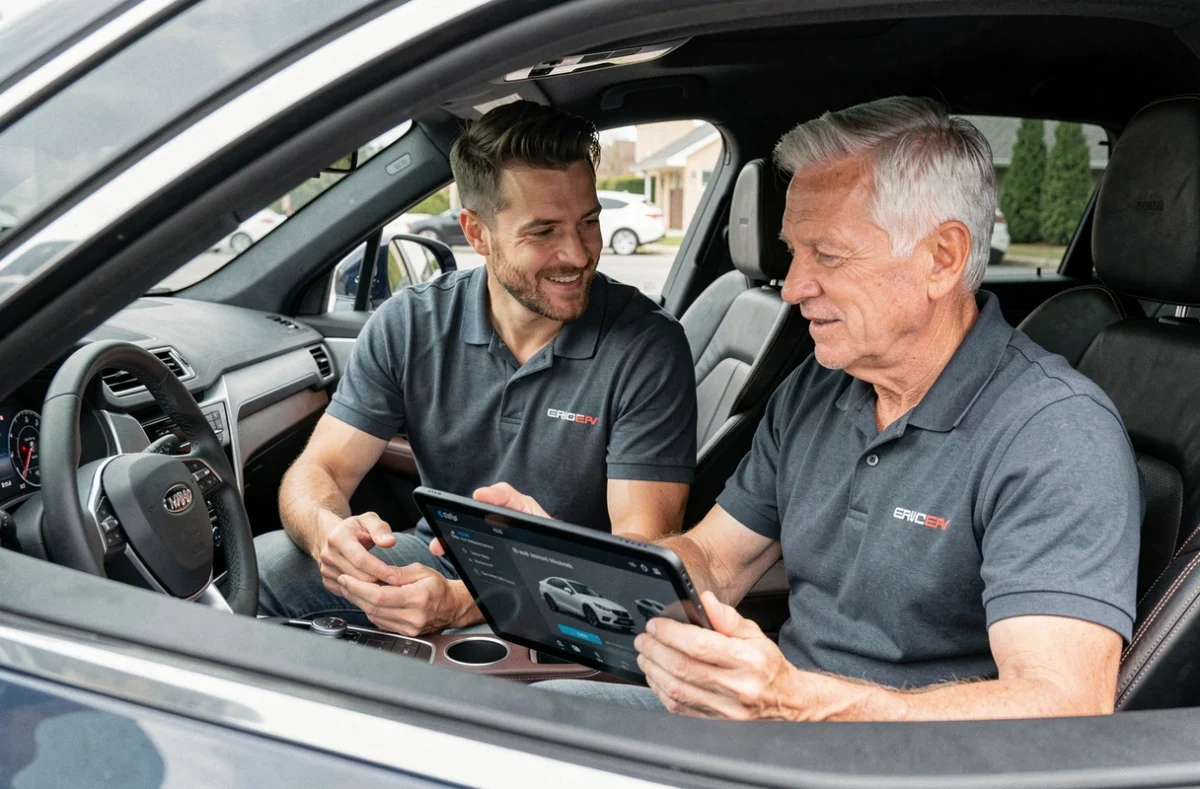
The technical inspection of electric vehicles is evolving. The points of verification are not the same as for a combustion vehicle. The absence of an exhaust pipe does not mean that the examination is simpler: inspectors now check high-voltage electrical insulation, the condition of charging cables, and the safety of connectors.
Before buying a used electric vehicle, demand a recent technical inspection (less than six months old). Compare the report with the specific inspection points for electric vehicles, which include:
- The insulation of the high-voltage circuit and the absence of current leaks
- The condition of the charging plugs and cables integrated into the vehicle
- The proper functioning of the regenerative braking system
A favorable technical inspection does not replace the battery diagnostic mentioned earlier. The two are complementary: the technical inspection checks safety, while the battery diagnostic assesses durability.
Buying a used electric car: the right time for car enthusiasts
The used electric car market is going through a phase favorable to buyers. The supply is increasing as the first owners resell their vehicles after three or four years of leasing. Resale prices are mechanically dropping, while the available models are gaining technical maturity.
Buying a used electric car simply requires a different perspective than that of combustion vehicles. Battery, software, previous owner’s charging habits: these three elements weigh more heavily than the displayed mileage. A vehicle with a lot of kilometers but charged almost exclusively at home may turn out to be a better purchase than a low-mileage model that has undergone daily fast charges.
An independent battery diagnostic remains the best protection before signing. Coupled with a recent technical inspection and verification of the onboard software, it allows for a confident purchase in a market where good deals exist, provided you know where to look.